Coffee Refills and Negative Space: Shooting America Like a Nihonga Painting
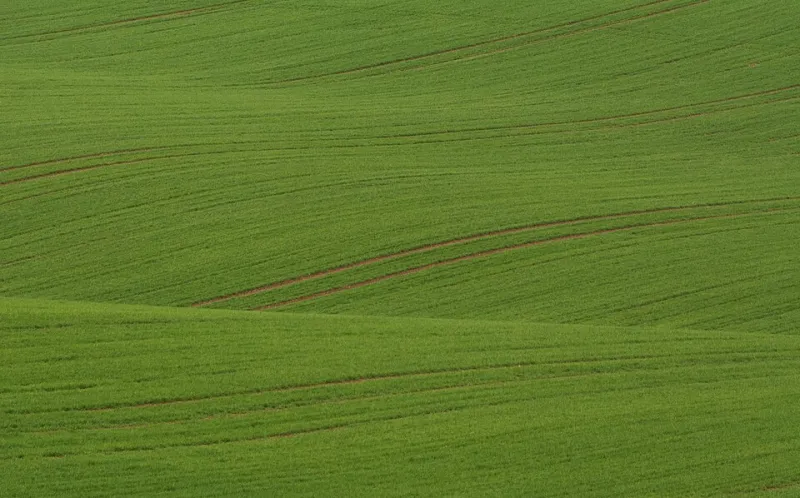
Photo: Martin Vorel, CC BY-SA 4.0, via Wikimedia Commons
There's a rule I learned early in my training: the empty part of the picture is doing as much work as the filled part. In Japanese, we borrow the word ma—the pause, the interval—and in composition we call the breathing room kukan, negative space. Nihonga painters, working with mineral pigments on silk or paper, were masters of this. They'd paint a single plum branch and let the emptiness around it carry the season.
Last summer, I gave myself an assignment: take that sensibility to the most un-minimal places in America. Diners. Lawns. Laundromats. Gas stations at dusk. I wanted to know if the compositional rules of Japanese still life could survive a road trip through suburban New Jersey and a week in the Midwest.
They could. Mostly. Here are five frames from that project, and what each one taught me.
1. The Diner Coffee, Half-Finished
A roadside diner outside Harrisburg, Pennsylvania, around 7 a.m. I asked the waitress to bring a cup of coffee and then to please not refill it, which confused her deeply.
I composed it the way I'd compose a tea ceremony photograph: the cup off-center, pushed to the right third, steam catching the window light, and—this is the important part—about two-thirds of the frame left as bare formica fading into shadow. The emptiness isn't nothing. It's the quiet of early morning, the space between sips, the whole mood of a diner before it fills up.
The American instinct is to fill the frame: the whole plate, the whole counter, the whole story. The Japanese instinct I was raised on is to suggest. One cup can hold an entire morning if you let the emptiness hold it with you.
2. The Sprinkler at Golden Hour
Nothing is more aggressively American than a lawn sprinkler, and nothing seemed less suited to minimalist composition—sprinklers are chaos by design.
But shoot one at golden hour, backlit, with the water drops turning into slow gold beads, and suddenly you have what nihonga painters called kacho-ga, flower-and-bird pictures: a single natural subject, isolated, glowing, suspended. I shot this one in a Columbus suburb at f/2.8, and the wet grass behind the arc of water dissolved into pure soft green negative space.
Restraint tip: I deliberately cropped out the house, the fence, the driveway. The sprinkler doesn't need context. It needs light.
3. The Laundromat Window at Blue Hour
A 24-hour laundromat in Oakland, shot from the sidewalk. Inside: one person, one dryer, one chair. Outside: me, the blue hour, and a plate of glass reflecting the street.
This is the closest I got to an actual nihonga composition. Traditional still-life arrangements follow a principle of odd-numbered grouping—one, three, five subjects, never four—and this scene assembled itself: one chair, one machine, one silhouette. The dryer's round window echoed the moon in a way I refuse to believe was accidental.
The fluorescent interior did the work of a lantern in an ukiyo-e night print—warm against cold, small against vast. I exposed for the outside and let the inside glow.
4. The Gas Station at Rest
Somewhere on Route 66 in Arizona, I pulled over at a gas station that had closed for the night. Pumps standing in the dark like patient animals. The price sign blank.
I've always loved how Japanese still life treats objects that are between uses—the tool set down, the meal finished. There's a word-adjacent feeling in American landscapes too, if you look: the closed diner, the parked truck, the pump nobody's using. These are still lifes whether anyone frames them or not.
Composition note: I placed a single pump at the far left edge and let the entire right side of the frame go to asphalt and the last orange stripe of sunset. Roughly 70% emptiness. On a phone screen it looks almost abstract. Printed large, the emptiness hums.
5. The Screen Door, Open
The last frame of the trip, at a friend's house in Georgia. A screen door standing open onto a backyard, caught between the dim interior and the bright lawn.
This one is pure kukan study. The door frame creates a picture-within-a-picture—very much a Japanese device, seen in everything from scroll painting to Tokyo apartment windows—and the rectangle of green lawn becomes the only color in an otherwise gray-and-brown image. No people. Just the invitation of an open door, which is a kind of portrait of hospitality without a host.
What the Road Trip Taught Me
I expected the exercise to feel like forcing a square peg into a round hole. Instead, I learned that negative space isn't a Japanese thing or an American thing—it's a noticing thing. The emptiness was always there in the diner, the laundromat, the dark gas station. I'd just never given it permission to be the subject.
If you want to try this yourself, start with one rule: whatever you think belongs in the frame, remove something. Then remove a little more. Stop when the picture feels slightly lonely. That loneliness, I've come to believe, is where the poetry starts.
And if a waitress asks why you don't want a refill, tell her you're composing. She'll still think you're strange. That's fine. Strange and quiet is a very good place for a photograph to come from.