Cloth Instead of Cardboard: Five Furoshiki Folds for Care Packages
The Amazon box problem
My neighbor Dina knocked on my door in October with a complaint and a muffin. The complaint was the mountain of Amazon boxes in our shared mailroom. The muffin was blueberry. She was right. I had been shipping care packages to my sister in Ohio in disposable mailers, and the mailroom looked like a cardboard landfill. That week I pulled out a stack of furoshiki I had been hoarding: cotton squares, vintage scarves, fabric scraps from a quilting neighbor. I wrapped one box. Then another. By the end of the month, the mailroom felt less like a loading dock and more like a gift shop.
Furoshiki is a Japanese wrapping cloth. It is older than disposable mailers and more forgiving. You fold, you knot, you carry. The cloth becomes part of the gift, or it comes back to you. It is not a craft project that requires a degree. It requires a square of fabric and the willingness to tie a knot that is not perfect.
Before you fold: the shipping caveat
A cloth-wrapped package is beautiful. It is also a bad candidate for a bare trip through the USPS sorting machine. Fabric snags, labels peel, and knots can catch. So the rule is simple: wrap the gift in furoshiki, then place the whole thing inside a reusable outer mailer or a plain box. If you want the cloth to be the outer layer, choose a tightly woven cotton, keep knots flat, and use a clear adhesive label pouch. I ship with USPS Priority Mail and UPS Ground. Both have handled my inner-wrapped gifts fine as long as the outer layer is sturdy. FedEx works too. The cloth is the ceremony; the outer mailer is the bodyguard.
Fold 1: The Two-Knot Square
Best for: a boxed mug, a paperback, a small tin of cookies.
Place the box in the center of the cloth, right side down. Bring two opposite corners to the center and tie a single knot. Bring the remaining corners across the top and tie a second knot. Tuck the loose ends under the knot. This is the fold I use most. It looks like a parcel from a small shop in Kyoto, and it takes about twenty seconds.
Fold 2: The Bottle Sash
Best for: jam jars, hot sauce, a bottle of sake.
Lay the cloth flat. Place the bottle in the center, near one corner. Roll the bottle away from you, tucking the cloth as you go. Stand the bottle up and tie the remaining two corners around the neck. The knot becomes a handle. I add a square of bubble wrap under the cloth for shipping. The sash keeps the jar from rolling, and the fabric absorbs the shame of a $12 bottle of hot sauce arriving like a treasure.
Fold 3: The Book Wrap
Best for: a paperback, a zine, a small sketchbook.
Place the book in the center with the spine facing you. Fold the left and right sides over the cover. Fold the top and bottom edges in. Flip the book over and tie the two remaining corners in a flat knot. This one is good for media mail because the cloth adds a little padding without bulk.
Fold 4: The Basket Fold
Best for: odd shapes, a bag of coffee, a pair of socks.
Put the item in the center. Bring all four corners up to the top and twist them together like a ponytail. Tie the twist in a knot. The result looks like a small bundle. It is not elegant, but it is secure. For a care package, I use this fold for loose items that would otherwise rattle around.
Fold 5: The Last-Minute Envelope
Best for: a gift card, a letter, a flat print.
Place the flat item in the center of a rectangular cloth. Fold the left and right sides toward the middle. Fold the bottom up and the top down. Tie a single knot in the center. This is not a traditional fold, but it works. It makes a flat packet that can slide into an outer mailer. I use it for prints because it keeps the paper from bending.
The theater of unwrapping
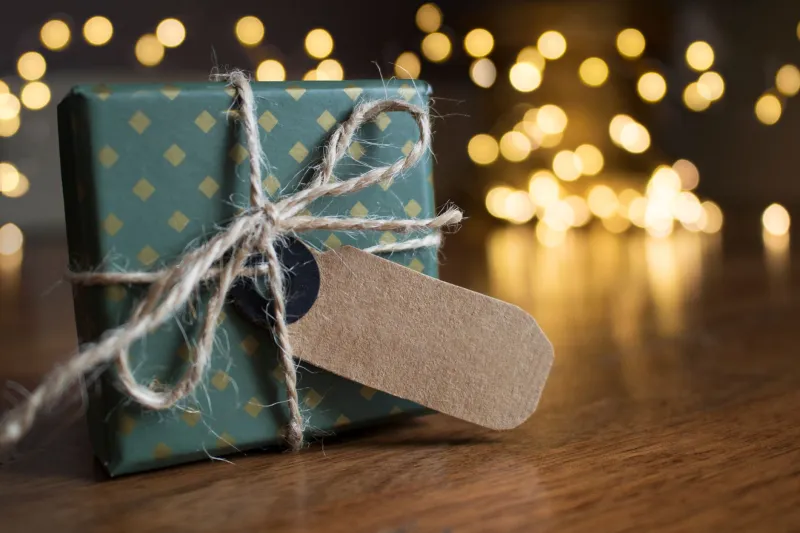
My sister called me after the first package arrived. She said she almost didn't want to untie the knot. That is the small theater of furoshiki: the gift begins before the object is revealed. The cloth says someone chose to wrap this. Someone thought about the corner and the knot. In a world of one-click shipping, that is not nothing.
The cloth also has a second life. My sister uses the indigo square as a scarf. My neighbor Dina uses one as a bread cover. The fabric scraps from the quilting neighbor went back to the quilting neighbor. The mailroom is still not a gift shop. But it is quieter. The mountain of boxes is smaller. And every care package now carries a little more care.