We Applaud the Cracks: One Year of Hosting Brooklyn's Most Embarrassing Karaoke Night

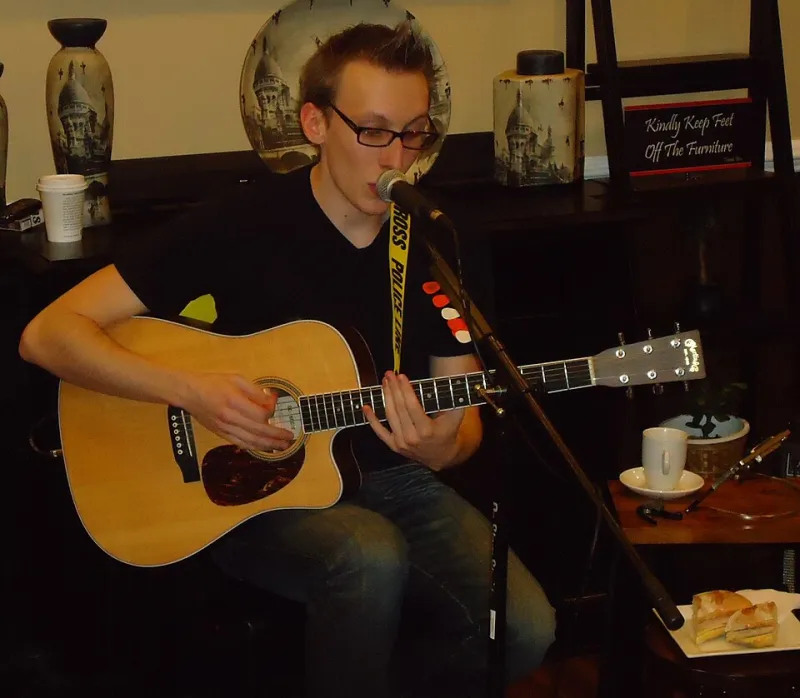
Photo: Kane Reinholdtsen kanereinholdtsen, CC0, via Wikimedia Commons
There's a laminated sign taped to the door of the bar on Myrtle Avenue that reads, in my own handwriting: TONIGHT, WE SING OUR SHAME.
Below it, in smaller letters: No ironic performances. No winking at the crowd. You must mean it.
That's the whole premise. Once a month, about forty people — regulars, first-timers, one guy who drives in from Hoboken — gather to perform the songs they'd normally skip. The boy-band deep cuts. The Eurodance relic. The Celine Dion ballad that got them through their divorce that they've told exactly no one about. We call it a kintsugi night, after the Japanese art of repairing broken pottery with gold. The logic is simple: the crack isn't the flaw in the object. It's the object's biography.
The Rule of the Unironic
Anyone who's been to a American karaoke night knows the dominant mode is armor. You pick something cool. You deliver it with a smirk, ready to laugh at yourself before anyone else can. Irony is a bulletproof vest, and everyone's wearing one.
My co-host Ren and I banned the vest.
The rules are posted by the stage, translated loosely from the spirit of wabi-sabi: You must announce why the song embarrasses you before you sing it. You may not apologize after. And the audience — this is the part that changed everything — is instructed to give its loudest, warmest applause not to the best performance, but to the most honest crack. The voice crack. The forgotten bridge. The moment someone's pitch wanders off a cliff and they keep walking anyway.
In kintsugi, the repair is drawn in gold precisely because it's the most interesting part of the bowl. So we gild the flubs. A missed high note gets a toast. A completely botched rap verse gets a standing ovation. One woman forgot every lyric to the second half of a Meat Loaf song and just hummed, eyes closed, hands raised, and I swear the room treated it like a religious experience.
What Guilty Pleasures Are Actually Hiding
Here's what surprised me after a year of this: nobody's shame songs are actually about the songs.
When people stand up and explain their pick — and they always explain, even though it's optional — they reveal the real object. A software engineer from Queens chose a teen pop anthem because it was the last song his sister played for him before she moved abroad. A retired nurse sang a schlubby novelty hit from the nineties because her late husband did a terrible dance to it every Thanksgiving. The embarrassment was never about taste. It was about tenderness. We're embarrassed by the songs we love without armor, and karaoke is where most of us go to practice wearing it.
The Japanese aesthetic tradition I keep circling back to is the idea that an object becomes more valuable through its history of use and damage — the tea bowl that's been glued and gilded is worth more than a pristine one because it carries evidence of care. A guilty-pleasure song is the same artifact. It's cracked because life hit it. Our job at the mic is to trace those cracks in gold instead of hiding them in the back of the cabinet.
The Performances I Can't Shake
A year in, there are three nights I return to.
There was the man who sang an early-2000s pop-punk track — the kind with a title that's basically a diary entry — and admitted he'd lip-synced it alone in his car for fifteen years because his college friends used to mock him for it. He got through about ninety seconds before his voice went, and the room sang the rest with him, at full volume, no irony anywhere. He sat down crying and grinning at the same time.
There was the teenager — our youngest ever, dragged by her aunt — who performed a bubblegum idol song with choreography she'd clearly practiced in her bedroom mirror for years. The room did the dance with her. Nobody had to be told how. Some choreography lives in the collective bloodstream.
And there was the quietest moment of the year: a woman in her sixties who sang a soft-rock ballad so earnest, so completely unfashionable, that for four minutes the bar went still in a way I've only otherwise witnessed at funerals and great jazz sets. She told us afterward it was the song from her wedding, forty years ago, to someone she still misses. She called her performance bad. Nobody in that room agreed.
Why This Works Better Here Than I Expected
I started this night half-expecting it to be a niche experiment — a Japanese-aesthetic curiosity for the five people in Brooklyn who'd sit still for it. Instead, the waitlist keeps growing, and I've come to believe it's because the format solves a specifically American problem.
We are a culture of highlight reels. Everyone's feed is a museum of flawless bowls. The pressure to be polished has gotten so total that people have lost the muscle for being witnessed imperfectly — and they're starving for it. Give Americans a room where the crack is the point, where failure is met with gold instead of laughter, and they will line up around the block to be broken in public. Politely. On a Tuesday.
Kintsugi gets misread in the West as a Pinterest aesthetic — gold veins on a mug, a candle that smells like the concept of healing. But the actual philosophy is braver than that. It says: bring the whole broken thing. Let's look at where it gave way. Let's make that the part everyone sees.
That's what happens at the mic on Myrtle Avenue every month. Somebody brings their worst song — the one they've kept hidden in the back of the cabinet for years — and forty strangers help them gild it.
If you come, remember the sign. No irony. No winking. And when somebody's voice breaks on the big note?
That's the gold. That's the whole night, right there.