Bring Your Broken Bridge: Inside the Karaoke Night Where Strangers Finish Each Other's Songs

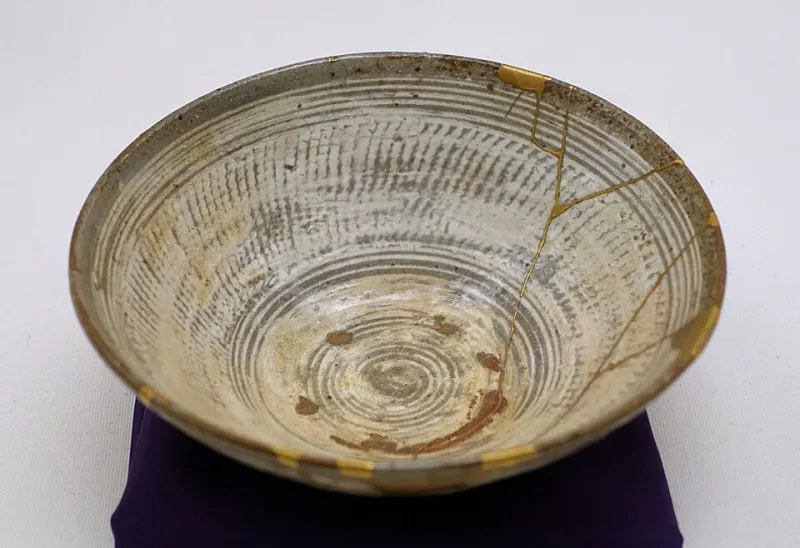
Photo: John Bauld from Toronto, Canada, CC BY 2.0, via Wikimedia Commons
There's a moment at every Repair Night — my monthly gathering in a Gowanus rehearsal space — when someone hands their laptop to a stranger and says the scariest sentence in the English language: "It's not finished."
No other context. No apology tour. Just a half-built verse, a loop that never found its chorus, and two people who met forty minutes ago over paper cups of sake and grocery-store mochi.
The Rules Are Simple, Which Is the Point
The format borrows less from open mics and more from kintsugi, the Japanese practice of mending broken ceramics with gold-dusted lacquer. Kintsugi doesn't hide the crack. It floods it with precious metal and calls the result more beautiful than the original. So the rules of the night follow suit:
- Bring something abandoned. A demo, a voice memo, a poem in your notes app from 2019.
- You do not fix your own work. Someone else does.
- You do not critique the work you receive. You finish it.
- At the end of the night, everyone performs both songs — the one they brought and the one they repaired.
That last rule is the karaoke part, and it's non-negotiable. The microphone doesn't care if you can sing. The microphone only cares that you showed up with your cracks visible.
What Americans Do With a Broken Song
I moved to New York seven years ago, and the first thing I noticed about American creative culture was the shrine we build around the solo genius. The bedroom producer. The lone novelist. The auteur. The myth says if your song didn't work, the problem was you — you lacked discipline, talent, or the right pain to mine. So demos die in folders called "stuff" and nobody attends the funeral.
In the studio traditions I grew up around, this would be unthinkable. The sensei's unfinished sketch became the student's lesson. Apprentices completed masters' brushstrokes for practice, and nobody considered the result tainted. The work belonged to the lineage, not the ego.
Repair Night is my attempt to import that idea through customs. And here's what I've learned after six sessions: Americans don't actually want critique. We have plenty of critique — comment sections, writing workshops, that one friend who "just plays devil's advocate." What we're starving for is repair. Someone to say, not "here's what's wrong," but "here's what this could become, and look, I'll help you carry it there."
The Night a CPA Finished a Synth-Pop Chorus
Last month, a financial analyst from Montclair brought a wobbling synth loop she'd recorded during the pandemic and never touched again. Her partner for the evening was a retired high school music teacher from Sunset Park who'd never touched a synthesizer in his life.
He wrote her a bridge. It was, objectively, a little corny — a key change straight out of a 1987 prom slow dance. When she sang it at the end of the night, off-key and grinning, the room did the thing rooms do when something true happens: nobody clapped right away. They just exhaled.
She told me afterward that she'd been "sitting on that loop for four years because finishing it meant admitting I cared." The stranger's corny bridge gave her permission to care out loud. The gold wasn't in the key change. The gold was in the handoff.
Vulnerability Works Better as a Group Project
Here's the part nobody tells you about creative vulnerability: it's unbearable alone but weirdly pleasant in company. Handing your failed demo to one person feels like confession. Handing it to a room of twenty people who've all done the same feels like a potluck.
This is why the pairing matters more than the quality of the output. Some songs finished at Repair Night are genuinely good. Some are gloriously rough. All of them get sung, because the metric of the evening isn't polish — it's completion. A finished imperfect song beats a perfect unfinished one every time, and everyone in the room knows it by hour two.
There's a Japanese word I think about constantly: kintsugi obviously, but also omoiyari — the quiet consideration of another person's feelings. When you receive a stranger's broken song, you're practicing it. You handle the demo like it's cracked ceramic, because it is. And when you hand yours over, you discover the strange lightness of not being the only one responsible for your own gold.
How to Run One Wherever You Are
People ask if they can steal the format. Please do. All you need:
- A room that isn't a bar (bars turn repair into critique after two drinks)
- A hard time limit — ninety minutes of making, no exceptions
- A speaker or small PA for the final sing-through
- Snacks, because Americans will share their feelings only under cover of crackers
The one thing you can't shortcut is the handoff itself. Let people choose their partner's work blindly, like a gift exchange. The randomness is what makes it feel like fate instead of homework.
Somewhere in your notes app, there's a song you abandoned because finishing it alone felt too heavy. It's not broken. It's just waiting for its lacquer and its gold — and maybe for a stranger in a Gowanus rehearsal space to sing the chorus you never wrote.
Bring the bridge. We'll bring the gold.