Empty Bar, Full Voice: My Season of Singing Before the City Woke Up

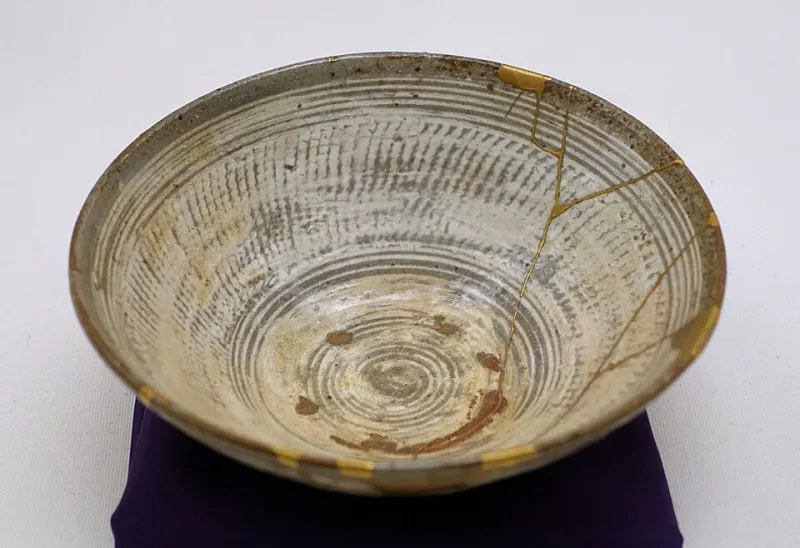
Photo: AleWi, CC BY-SA 4.0, via Wikimedia Commons
There's a bar on Avenue B that opens at 5 p.m. Most mornings, by 6 a.m., I'm standing on its sticky little stage, alone, singing Fleetwood Mac to a room of upside-down chairs.
This is not a metaphor. I pay the owner fifty bucks an hour. He hands me the key, shrugs, and goes back to whatever bartenders do at dawn. And for the last few months, that's where I've been doing the most honest singing of my life — badly, at full volume, to absolutely nobody.
The Wabi-Sabi of a Cracked Note
In Japan there's a word that hovers around everything I make: wabi-sabi, the beauty of the imperfect and unfinished. We usually apply it to objects — a chipped bowl, a repaired crack filled with gold. But I've started thinking of it as a vocal philosophy too.
A voice that wobbles on the high note is not a broken voice. It's a voice with a history. When I sing alone in that empty bar, no one is grading me, and something strange happens: the pitch gets worse and the feeling gets better. My cracks are the gold in the kintsugi. They're the part you remember.
American karaoke culture — the televised kind, the TikTok kind — has convinced us that singing is a talent show you either win or humiliate yourself in. We've turned the most communal human activity into an audition.
What the Coaches Said
I didn't want to write this on vibes alone, so I called some people who know voices for a living.
Maria Chen, a vocal coach in Sunset Park who trains Broadway understudies, told me something that stuck: "The students who improve fastest are the ones who are willing to sound ugly in the practice room. The ones who can't bear to sound bad usually plateau. Perfectionism isn't discipline — it's fear wearing a nicer outfit."
Then I posted in a stage-fright recovery group on Reddit and got a dozen DMs. A 41-year-old accountant from Ohio wrote that she hadn't sung in front of anyone since middle school choir, when a teacher laughed at her. She's been doing my exact experiment — alone, in her car, in the parking garage before work. "It's the first time in thirty years my voice has felt like mine," she wrote.
That's the thing nobody tells you about stage fright: it's often not about the audience. It's about an old wound someone handed you when you were twelve, and you've been carrying it ever since like it's your voice itself.
The 6 A.M. Rules of the Experiment
If you want to try this, my rules were simple:
- No recording. The moment there's a recording, there's a future audience, and the whole point evaporates.
- No warm-ups. I wanted my actual morning voice — gravelly, half-awake, human.
- One song sung fully, no do-overs. If I cracked, I kept going. The crack is part of the take.
- Sing at least one song I'm embarrassed to love. (Current rotation: a truly shameless amount of early 2000s pop-punk.)
Week one, I could barely get through a verse without my throat closing — not from technique, from old shame. By week six, I was belting Stevie Nicks to the jukebox like it owed me money.
What the Empty Room Teaches
Here's what surprised me most. I assumed singing alone would feel lonely. Instead it felt like the room was finally on my side.
An empty bar at dawn is a space stripped of judgment — no one at the pool table smirking, no friends filming for the group chat. It's the closest thing I've found in New York to the Japanese concept of ma, the negative space that gives meaning to what fills it. The silence of the room is what makes the voice audible.
And I think that's the argument I actually want to make: we don't have a singing problem in America, we have a listening problem. We've stopped listening for character and started listening for correctness. Karaoke used to be about the joke, the heartbreak, the friend who murders every high note with total joy. Now we clap for the person who sounds like the recording.
But nobody falls in love with a recording. We fall in love with cracks.
Bring Your Broken Voice
Last week, the bartender stayed for my last song. I didn't know he was there until I finished and heard clapping from the doorway. I almost apologized for the pitch. I didn't.
He said, "That was the realest thing I've heard in this room."
That's the whole review I needed. If you've got a voice you've been hiding since someone laughed at it in 2003, I'm telling you: rent an empty room, get up before the city wakes, and sing it cracked. The gold goes in the cracks. That's not the consolation prize. That's the point.