Six Rules, Five Rebellion: The Japanese Aesthetic Codes I Bent for America
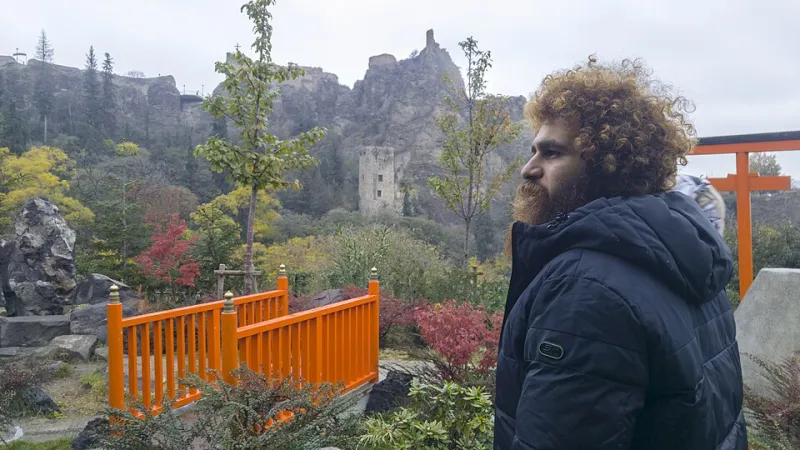
Photo: Mostafameraji, CC0, via Wikimedia Commons
I was raised on rules. Not the strict kind — the quiet kind. The ones you absorb from a grandmother arranging flowers, or a teacher sliding your composition three inches to the left without explanation. When I started showing my work to American audiences, I discovered those quiet rules were louder than I thought. So I did what any stubborn artist does when someone pokes their assumptions: I ran a series of experiments.
Here are five rules I broke on purpose, what happened, and the one I'd defend with my life.
Rule Broken #1: Wabi-Sabi Says Let It Fade
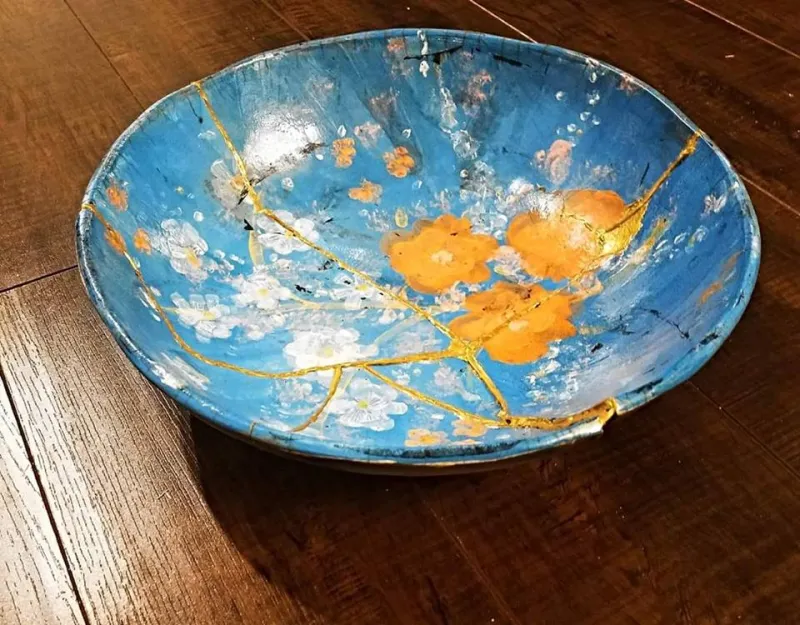
The principle: imperfection, weathering, and impermanence are beautiful. Rust, cracks, faded indigo — these carry dignity.
The break: For my Neon Bathhouse series, I did the opposite. I cranked saturation to levels my Kyoto instructors would consider a personal insult. Hot pinks, electric blues, chrome-bright reflections in Portland rain.
What happened: American audiences loved it. There's an appetite here for maximal color that I'd been politely suppressing for years. But here's the twist — the series only works because the structure underneath is still restrained. Loud color, quiet composition. Turns out you can break wabi-sabi's surface and keep its bones.
Rule Broken #2: Kill the Center
The principle: Japanese composition avoids dead-center placement. Off-axis, asymmetric, breathing room on one side — that's the training.
The break: My portrait of a taiko drummer, shot for a US magazine feature, is framed dead center, symmetrical as a shrine gate. I did it to feel monumental, like a coin you can't look away from.
What happened: It's one of the most reproduced images I've ever made. Centered symmetry reads as authority to American eyes in a way it doesn't always in Japan, where it can read as formal or stiff. Context changes meaning. Noted.
Rule Broken #3: No Shadows Without Light
The principle: Traditional Japanese photography and painting treat shadow as the subject. In'yo — the interplay of dark and light — means you honor the darkness, you don't erase it.
The break: For a commercial shoot, I lit everything flat and bright. Fill lights, reflectors, the whole no-shadows-allowed setup. The client wanted "clean."
What happened: The images were technically fine and completely forgettable. I keep one on my wall as a warning label. This is the only rule I broke that taught me nothing except that the rule was right.
Rule Broken #4: One Season at a Time
The principle: Japanese aesthetics are obsessive about seasonality. A spring image contains spring — nothing else. Mixing seasons in one frame is a compositional sin.
The break: My series Two Weathers deliberately collides seasons in single frames — cherry blossoms reflected in puddles full of autumn leaves, snow on a summer street. Shot over months, composited with care.
What happened: This one divided my audience down the middle, and I've come to love that. Some viewers find it disorienting; others tell me it captures how homesickness actually feels — all your seasons at once, in one frame. For an artist who moved across an ocean, that's not a broken rule. That's a self-portrait.
Rule Broken #5: The Layered Composition Should Whisper
The principle: Layered, multi-plane compositions — foreground, middle, distance — are supposed to reward slow looking. You discover the layers; the image doesn't announce them.
The break: For my series on American roadside culture, I stacked my layers loud. Motel signs overlapping with mountain ranges, a coffee cup in the foreground screaming at a sunset. Every plane competing.
What happened: It taught me something about visual hunger. American visual culture — billboards, diner windows, highway signage — is built for 70-mile-per-hour reading. My layered compositions had to survive that speed. Some of my Kyoto training didn't. I kept what could.
The Rule I'll Never Break
So which one survived every experiment untouched?
The pause.
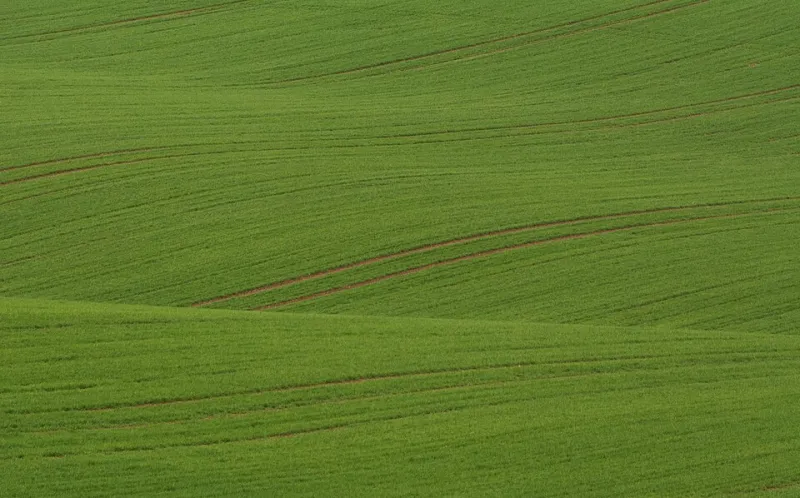
Every image I've ever made that mattered has space in it somewhere — an empty stretch of tatami, a blank sky, a stretch of unpainted paper, a beat of nothing between the subject and the frame's edge. I tried to break this one too, honestly. I packed a frame edge to edge, no breathing room, maximal everything. It's the only image from that year I deleted.
Because ma — the interval, the held breath, the room around a thing — isn't a compositional technique. It's the reason I make work at all. Color, symmetry, layers, seasons: I can bend all of it for a new audience, and I'm glad I did. American eyes have made my work braver and stranger.
But the pause is where I live. You can borrow my rules. You can't have my silence.