The Mirror That Refused to Look Away: A Kyoto Heirloom and My First Self-Portrait
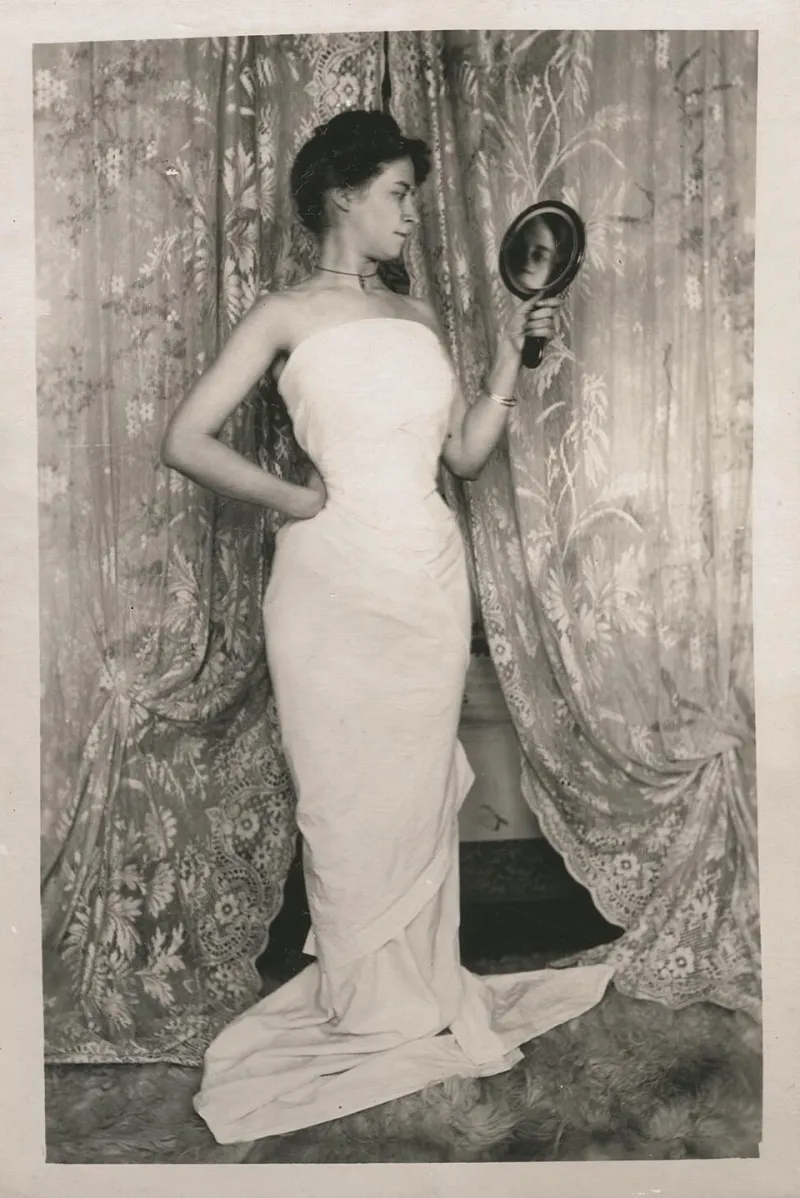
Photo: William I. Goldman (1856-1922), Public domain, via Wikimedia Commons
The mirror sits on my windowsill in Bushwick, a small hand mirror with a lacquered back and a brass rim worn smooth by somebody else's thumb. My grandmother carried it from Kyoto in 1958, tucked into a suitcase with kimono fabric and tea canisters, and for most of its American life it did what heirlooms do — sat in drawers, outlived arguments, waited.
Last winter it started waiting for something else. It started waiting for me.
The Face I Kept Out of Frame
I have photographed strangers on subway platforms, cousins at weddings, the steam rising off a halal cart in midtown at 4 a.m. I once spent an entire October chasing the light through Green-Wood Cemetery. But my own face? Not once. Not a selfie for the grid, not a moody shadow, nothing.
I told people it was a style choice. It was actually a coward's choice dressed in a beret.
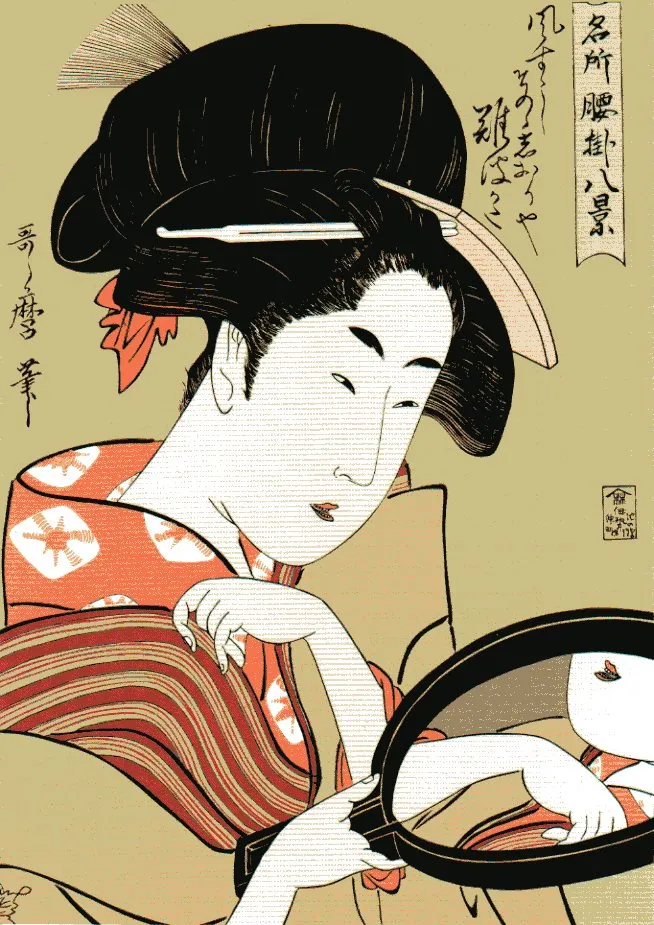
Then, in January, I was rearranging my studio shelf and the mirror fell into my hands. I looked into it — really looked, the way my grandmother used to before she pinned her hair — and something shifted. She used this mirror not to admire herself but to prepare herself. To get ready to be seen. There's a Japanese word hiding in that ritual: yōi, the state of readiness. The mirror wasn't vanity. It was a threshold.
I decided I would make my first self-portrait with it. Then I didn't touch my camera for three more weeks. Old habits, as they say, die in installments.
Why We Hide From Our Own Lens
Here's the thing about American creative culture: we talk a big game about vulnerability. Brené Brown is basically a national monument. Open mics in this city run on the fuel of people bleeding on stage. And yet put a camera in front of most artists and point it at them, and suddenly everyone has a very urgent appointment elsewhere.
We'll confess our traumas in a caption but not hold eye contact with our own lens. The camera is a witness, and witnesses make us accountable.
My grandmother's generation had a different relationship with being seen. In the Japan she came from, restraint wasn't avoidance — it was a container. You didn't perform your feelings; you arranged them, the way you arrange three branches in a tokonoma alcove and let the empty space do the rest. When she finally did show emotion, it landed like thunder in a quiet room.
I kept thinking about that while I fumbled with my tripod.
The Session Where Nothing Went to Plan
The first real attempt was a comedy. Golden hour came and went while I adjusted my aperture like a coward adjusting a collar. The mirror caught nothing but my ceiling. My cat walked through seventeen frames.
But somewhere around attempt four, I stopped posing and started preparing — the way she did. I held the mirror, looked into it, breathed. And when I finally released the shutter, I wasn't trying to look beautiful or tortured or Interesting. I was just present. The photo is unremarkable technically. Half my face is in shadow. The mirror shows a sliver of window and a fire escape.
It's the most honest picture I've ever taken.
Restraint Is Not the Same as Hiding
American audiences, I've noticed, often mistake vulnerability for volume. Cry bigger. Confess harder. Show more skin, more damage, more receipts. And there's real courage in that — but there's another kind too.
The Japanese aesthetic tradition I grew up hearing about — the ma, the negative space, the beauty of the unfinished — offers a different model. You don't have to show the whole wound. You can show the edge of it. A self-portrait where your eyes are cast down can be more exposed than one where you're weeping directly into the lens, because the viewer has to lean in. Restraint invites. Exhaustion repels.
When I showed the mirror portrait at a small gallery night in Greenpoint, a woman stood in front of it for a long time and then said, "I feel like I interrupted something private." That's exactly the effect I couldn't have articulated but was chasing. Not a performance of intimacy — the trace of it.
A Practical Word for Fellow Hiders
If you've been photographing everything but yourself, here's what the mirror taught me, in no particular order:
- Use an object as a proxy. The mirror gave me something to hold, a way to be in the frame without feeling naked in it. A teacup, a letter, a tool of your trade — let it carry some of the weight.
- Prepare, don't perform. Make a ritual of it. Tea, a specific song, the same window light. Rituals lower the stakes because they make the session ordinary.
- Let one thing stay hidden. Half a face, hands only, a reflection instead of the direct gaze. The unsaid part is what people remember.
- Shoot before you feel ready. You never will. My grandmother pinned her hair with the mirror fogged from the bath steam. Readiness is a myth; threshold-crossing is not.
What the Mirror Shows Now
The portrait still hangs in my studio, and the mirror has migrated from windowsill to shelf to, occasionally, into my camera bag. Sometimes I bring it to shoots and hold it while I work, a small reminder that being seen is a skill, not a personality trait.
My grandmother never called herself an artist. But she crossed an ocean with a mirror in her suitcase, which is its own kind of self-portrait — a declaration that she intended to keep looking at herself, preparing herself, wherever she landed.
I'm just borrowing the technique. And finally, thirty-some years into my life and three years into this studio, pointing it at the right subject.